Unveiling the Past: Your Guide to Tracing Ancestors in the NSDAP Files
For many, the journey into family history is one of discovery and connection, often leading to surprising revelations. When those revelations touch upon the darkest chapters of the 20th century, the search takes on profound significance. The NSDAP membership files, once slated for total destruction, stand today as a monumental, if often unsettling, resource for genealogists and historians alike. Thanks to meticulous preservation efforts and digital initiatives like the one offered by *Die Zeit*, understanding ancestral connections to the National Socialist German Workers' Party is now more accessible than ever. This guide will walk you through the history of these vital documents, their contents, and how to navigate them, particularly through the lens of the **Die Zeit Nsdap Mitgliederkartei** resource.
The Shadow of Destruction: A Narrow Escape for Historical Truths
The year is 1945. Hitler's Third Reich crumbles under the weight of Allied forces. In Munich, the heart of the Nazi party, chaos reigns. As April draws to a close, a desperate order echoes through the once-imposing halls of the Brown House, the NSDAP's central headquarters: destroy all traces. Anxious officials loaded truckloads of paper, including millions of meticulously compiled index cards – the lifeblood of the NSDAP's membership registry – onto vehicles. These cards, color-coded green and blue, existed in duplicate: one set arranged alphabetically, the other geographically by *Gaue* (districts). Hastily mixed to prevent future reconstruction, these tons of paper were destined for annihilation in a local paper mill. The party leadership sought to erase not just documents, but a comprehensive record of its adherents, their identities, and their geographical spread.
Yet, fate, or perhaps a flicker of defiance, intervened. At the paper mill in Freimann, a man named Hanns Huber, the mill owner, recognized the immense historical significance of the documents he was tasked to pulp. Against the desperate directives of a collapsing regime, Huber halted the destruction, saving a priceless, albeit grim, record of history. His brave act ensured that the full scope of Nazi party membership would not vanish into oblivion. For a deeper dive into this incredible story, read about
How the NSDAP Membership Files Survived Destruction in 1945.
From Salvage to Archive: The Birth of the Berlin Document Center
The incredible survival of the NSDAP files soon became a matter of international importance. In the autumn of 1945, American forces, recognizing the critical value of these documents for denazification efforts and historical understanding, salvaged the precious records. By early 1946, these archives found a new home in the Berlin Document Center (BDC), established by the Americans. This move solidified their future as a crucial resource for historical inquiry and, later, for genealogical research.
News of the discovery slowly filtered out to the public. Initial reports, such as those in the "Neue Zürcher Zeitung" in mid-October 1945, hinted at the recovery of "complete lists" of NSDAP members. While these early accounts were often incomplete or inaccurate – referring to "lists" rather than the two distinct card indexes, and overestimating their completeness – they nevertheless sent shockwaves across the globe. The realization that the membership records, encompassing over ten million names, had largely survived promised to significantly aid the post-war denazification processes and expose the widespread reach of the party. Publications like the US-military-issued "Neue Zeitung" soon confirmed the miraculous preservation under the headline "Namen unter Abfallpapier" (Names under Waste Paper), solidifying the files' place in history.
Navigating the **Die Zeit Nsdap Mitgliederkartei**: Your Search for Ancestors
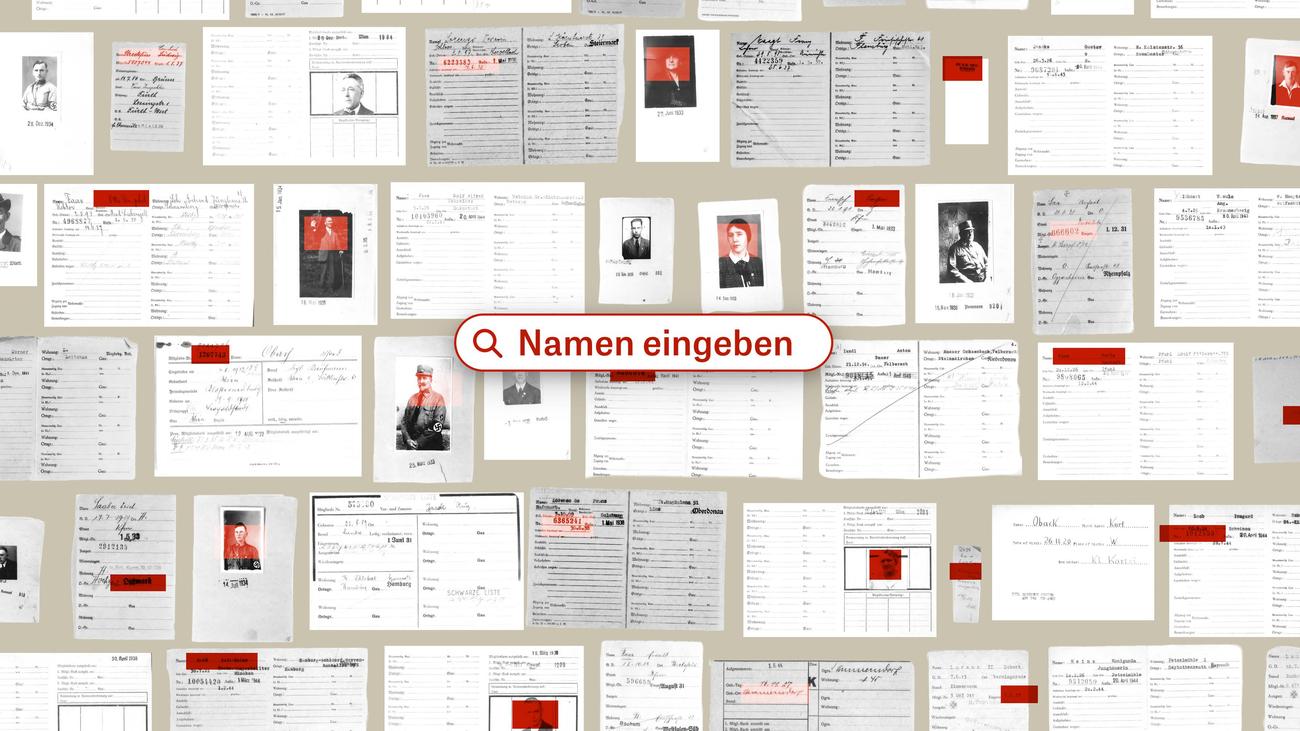
Today, resources like the **Die Zeit Nsdap Mitgliederkartei** search engine provide an invaluable portal into these extensive archives. *Die Zeit*, through its dedicated historical research, offers a user-friendly platform designed to help individuals and researchers explore the intricate details contained within the surviving party files.
The archive primarily consists of two main card indexes, originally maintained in parallel by the NSDAP:
1. **The Zentralkartei (Central Card Index):** This was the main alphabetical registry of members.
2. **The Gaukartei (District Card Index):** This index organized members geographically by their respective *Gaue*.
It's crucial to understand that many members appear in both card indexes, meaning a single individual might have multiple entries. This redundancy, while initially challenging, can also provide more comprehensive information. However, due to the chaos of the war's end and the attempted destruction, neither index is entirely complete. Party researcher Jürgen Falter, who extensively studied these files for his seminal work *Hitlers Parteigenossen*, estimates that roughly 44% of the Zentralkartei and 77% of the Gaukartei were preserved. Despite these gaps, combined, these two collections still allow for the identification of approximately 90% of all former NSDAP members, representing about 9.1 million individuals from the 10.2 million Germans who joined the party between 1925 and 1945. For more on the sheer scale of this archive, explore
Unearthing History: Millions in the NSDAP Membership Card Index.
To successfully utilize the **Die Zeit Nsdap Mitgliederkartei** search, precision is paramount. Given the commonality of names, the most critical pieces of information you will need to identify an individual with certainty are their **exact birth date and birthplac**. Without these specifics, locating the correct person among potentially many with the same name can be incredibly difficult, if not impossible.
What You Can Discover: Beyond a Name on a Card
Discovering an ancestor's name in the NSDAP files can be an emotionally complex experience. Beyond the initial confirmation of membership, these cards can offer a window into various facets of an individual's life and their engagement with the party. While specific content can vary, a typical membership card might include:
* **Full Name and Aliases:** Essential for identification.
* **Birth Date and Place:** Crucial for disambiguation.
* **Membership Number:** A unique identifier within the party.
* **Date of Entry:** Reveals when the individual joined the party, indicating early adherence or later opportunistic membership.
* **Occupation:** Can provide insights into social status or professional background.
* **Address:** Helps to confirm geographical location.
* **Notes or Remarks:** Sometimes, additional annotations regarding transfers, resignations, or even expulsions might be present, offering further narrative depth.
This information can be vital for filling gaps in family trees, understanding an ancestor's political leanings during a tumultuous period, and contextualizing their life choices. It often raises difficult questions but provides an invaluable factual foundation for further research and personal reflection.
Practical Tips for a Successful Search
Embarking on this particular genealogical journey requires both diligence and sensitivity. Here are some tips to maximize your chances of success when using resources like the **Die Zeit Nsdap Mitgliederkartei**:
* **Gather All Known Information:** Before you begin, compile every detail you have about your ancestor, especially full name, exact birth date, and birthplace. The more precise your data, the higher your chances of a definitive match.
* **Prepare for Multiple Results:** Due to the dual card indexes and potential for common names, be prepared to sift through several entries that might appear similar. Your precise birth date and place are your best filters.
* **Understand the Limitations:** Remember that the archives are not 100% complete. If you don't find a record, it doesn't definitively mean your ancestor wasn't a member; it could mean their card was among those destroyed or has not yet been digitized/indexed.
* **Cross-Reference with Other Sources:** If you find a record, use it as a starting point for further research. Compare the information with other genealogical documents (birth certificates, marriage licenses, death records, local archives) to build a more complete picture.
* **Be Prepared Emotionally:** Discovering an ancestor's connection to the NSDAP can evoke strong emotions. Approach the search with an open mind, recognizing that historical context is complex, and individuals' motivations were varied.
* **Consult Experts:** If you encounter difficulties or need deeper analysis, consider consulting professional genealogists specializing in German records or historians with expertise in the Nazi era.
Conclusion
The **Die Zeit Nsdap Mitgliederkartei** and the underlying archives represent a powerful testament to the enduring importance of historical records, even those born from tragedy. What began as a desperate attempt to erase a painful past was thwarted by a courageous act of preservation, culminating in a resource that profoundly impacts our understanding of the mid-20th century. For those seeking to trace their lineage, these files offer an unparalleled, albeit often challenging, opportunity to connect with a critical piece of family and global history. By carefully navigating these comprehensive records, individuals can bring to light truths that might otherwise remain buried, offering context, understanding, and a deeper appreciation for the complex tapestry of our shared human story.